The landscape of retail investing has undergone a significant transformation, with algorithmic trading emerging as a pivotal force. This article examines the evolution of retail participation in financial markets, the advent and integration of algorithmic trading, and its multifaceted impact on individual investors.
For much of financial history, retail investing was characterized by limited access, high transaction costs, and reliance on intermediaries. Understanding this historical context is crucial to appreciating the seismic shift brought about by technological advancements.
Early Barriers to Entry
Prior to the 20th century, direct participation in financial markets by individuals was largely confined to the affluent. The prohibitive cost of information, complex settlement procedures, and the absence of standardized exchanges created a formidable barrier. Investing was often seen as an endeavor for the elite, facilitated by private bankers and brokers who leveraged personal networks and insider knowledge.
The Rise of Discount Brokerages and Mutual Funds
The latter half of the 20th century witnessed a democratization of access. The advent of discount brokerages, starting in the 1970s, significantly reduced commission fees, making stock ownership more attainable for the middle class. Concurrently, the proliferation of mutual funds offered a convenient way for individuals to diversify their portfolios and gain exposure to a broader range of assets without extensive personal research or management. These developments allowed retail investors to dip their toes into the market with greater ease, though the actual trading and decision-making still largely remained a manual process or delegated to professionals.
The Internet and Self-Directed Investing
The dawn of the internet age marked another inflection point. Online brokerage platforms, emerging in the late 1990s, further slashed transaction costs and provided direct access to market data and trading interfaces. This period fostered the concept of “self-directed investing,” empowering individuals to manage their own portfolios without the constant intervention of a financial advisor. While this era reduced friction, the decision-making process remained fundamentally human, guided by individual analysis, intuition, or publicly available information.
The Genesis of Algorithmic Trading
Algorithmic trading, initially the domain of institutional investors, gradually began to influence and eventually integrate into the retail sphere. Its origins lie in the desire for efficiency and speed in executing trades.
Institutional Foundations
Algorithmic trading, often abbreviated as algo trading, originated in institutional settings, driven by the need to execute large orders without significant market impact. Early algorithms focused on breaking down large trades into smaller ones, strategically released over time to minimize price fluctuations. These were not complex predictive models but rather sophisticated order execution strategies designed for efficiency.
High-Frequency Trading (HFT) and Its Characteristics
A significant evolution within algorithmic trading was the emergence of High-Frequency Trading (HFT). HFT firms utilize extremely powerful computers and proprietary algorithms to execute a massive number of orders at lightning speeds, often within microseconds. Their strategies typically involve exploiting fleeting price discrepancies between exchanges, providing liquidity, or engaging in statistical arbitrage. While primarily an institutional phenomenon, the technological infrastructure developed for HFT indirectly laid the groundwork for faster retail trading systems.
The Democratization of Algorithmic Tools
As technology matured and costs decreased, rudimentary algorithmic capabilities began to trickle down to retail investors. Initially, this took the form of automated order types offered by brokers, such as stop-loss orders or limit orders. These functions, while basic, represented an initial step towards automating trading decisions based on predefined rules.
Algorithmic Trading’s Entry into Retail Investing
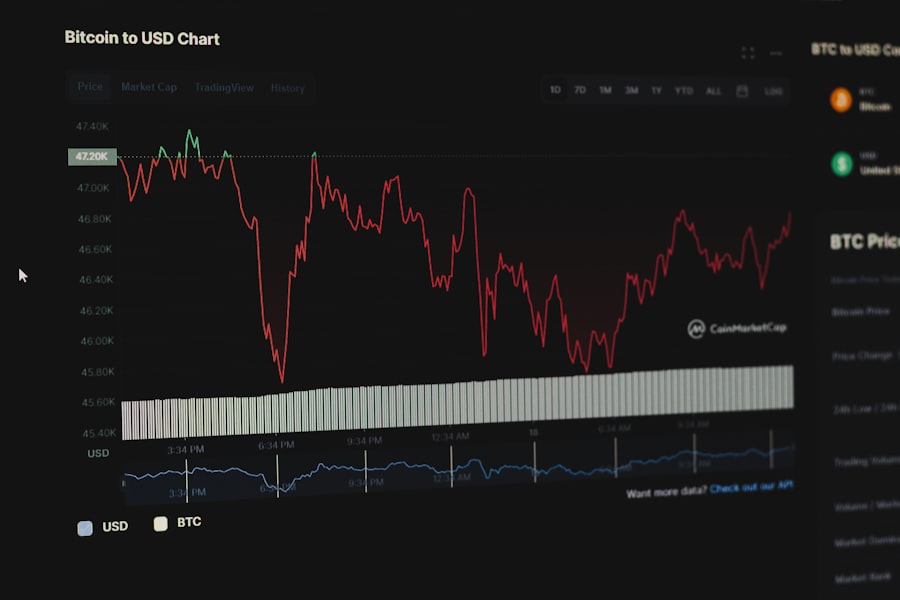
The transition of algorithmic trading from a niche institutional practice to a tool increasingly accessible to retail investors is a multi-faceted development. It involves both direct and indirect integration.
Retail Brokerage Platforms and API Access
Many modern retail brokerage platforms now offer varying degrees of algorithmic trading capabilities. This can range from built-in strategy builders, allowing users to define rules for automated trading, to Application Programming Interface (API) access. API access empowers technically proficient retail investors to connect their own custom-built algorithms to the brokerage’s trading engine, enabling them to execute trades based on their specific code. This provides a direct conduit for individual investors to participate in algorithmic execution.
Robo-Advisors and Automated Portfolio Management
Robo-advisors represent one of the most visible and accessible forms of algorithmic trading for retail investors. These platforms use algorithms to construct, manage, and rebalance investment portfolios based on a client’s risk tolerance, financial goals, and timelines. The algorithms typically employ modern portfolio theory principles, asset allocation strategies, and tax-loss harvesting techniques to optimize returns and manage risk. For many retail investors, robo-advisors provide a low-cost, automated alternative to traditional financial advisors.
Social Trading Platforms and Copy Trading
Another facet of algorithmic influence in retail investing is found in social trading platforms. While not strictly algorithmic trading per se, these platforms often incorporate algorithms for analyzing and ranking traders, and for facilitating “copy trading.” Copy trading allows retail investors to automatically replicate the trades of successful traders on the platform. The selection of which traders to copy can itself be aided by algorithms that analyze performance metrics and risk profiles. This introduces an automated element to decision-making, even if the underlying strategy originates from a human.
The Impact on Retail Investor Behavior and Outcomes
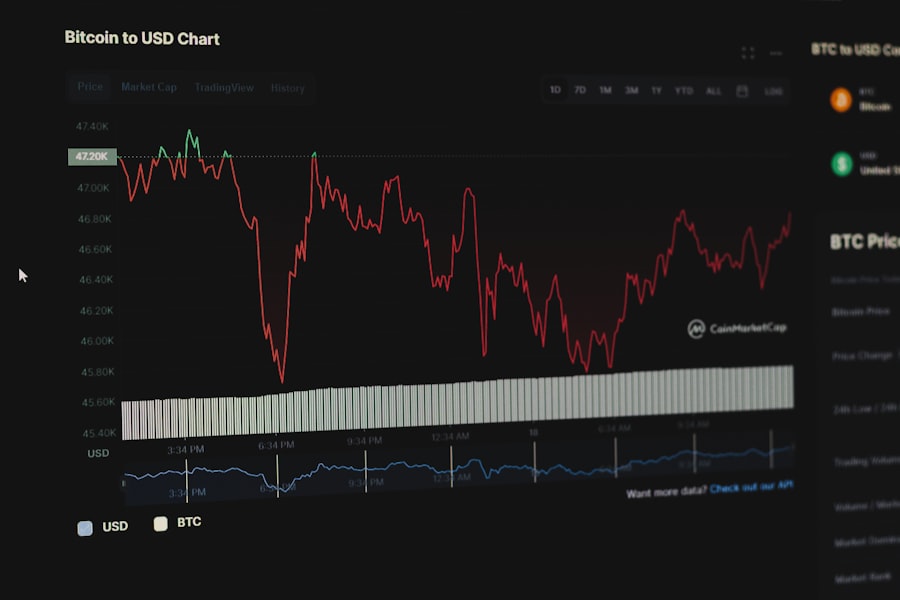
The integration of algorithmic trading profoundly affects the way retail investors interact with the market, influencing their strategies, decision-making, and ultimately, their financial outcomes.
Advantages for Retail Investors
Algorithmic trading offers several potential advantages for retail investors. Firstly, it allows for the elimination of emotional biases from trading decisions. Human investors are prone to fear and greed, which can lead to impulsive and suboptimal choices. Algorithms, by contrast, execute trades based on predefined rules, impervious to psychological pressures. Secondly, algorithms enable faster execution speeds, which can be crucial in volatile markets or when attempting to capitalize on fleeting opportunities. Thirdly, they provide the capacity for backtesting strategies against historical data, allowing investors to assess the potential efficacy of a strategy before deploying real capital. Finally, algorithms can facilitate portfolio diversification and rebalancing more efficiently than manual processes, ensuring portfolios remain aligned with desired risk profiles.
Challenges and Disadvantages for Retail Investors
Despite the benefits, algorithmic trading also presents significant challenges for retail investors. A primary concern is the complexity and technical barrier to entry. Developing and deploying effective trading algorithms requires programming knowledge, an understanding of market microstructure, and robust risk management expertise, skills not universally possessed by retail investors. There is also the inherent risk of flawed algorithms. A poorly designed algorithm, or one that has not been adequately tested for various market conditions, can lead to substantial losses.
Furthermore, relying heavily on algorithms can lead to a lack of fundamental understanding of the underlying investments. If an investor blindly follows an algorithm without comprehending its logic or the assets it trades, they may be unprepared for unexpected market events. The “black box” nature of some algorithms can also be problematic, making it difficult to diagnose issues or understand why certain trades were executed.
Shifting Landscape of Market Participation
The proliferation of algorithmic trading, even in the retail space, contributes to a market that is increasingly characterized by speed and automation. This can create a significant information asymmetry between sophisticated institutional players with vast computational resources and individual retail investors. While retail investors gain newfound capabilities, they are still operating in an arena where high-frequency trading firms and institutional algorithms dominate order flow and liquidity provision. The market has become a competitive race, and individual algorithms, while powerful for a single investor, are often outmatched by the collective computational power of institutional players. This can lead to a sense of being a small fish in a very fast pond.
The Future of Algorithmic Retail Investing
| Metric | Before Algorithmic Trading | After Algorithmic Trading | Impact on Retail Investors |
|---|---|---|---|
| Trade Execution Speed | Seconds to minutes | Milliseconds to microseconds | Faster order execution reduces slippage and improves trade efficiency |
| Access to Advanced Strategies | Limited to manual strategies | Wide availability of algorithmic and quantitative strategies | Retail investors can implement complex strategies previously reserved for institutions |
| Market Liquidity | Lower liquidity during off-hours | Increased liquidity due to automated trading | Improved price stability and tighter bid-ask spreads |
| Cost of Trading | Higher commissions and fees | Reduced costs due to automation and competition | Lower barriers to entry for retail investors |
| Risk Management Tools | Basic stop-loss and limit orders | Advanced algorithmic risk controls and real-time monitoring | Enhanced ability to manage and mitigate risks |
| Market Impact | Manual trades with limited market impact | Potential for rapid market moves due to algorithmic activity | Increased volatility but also opportunities for arbitrage |
| Data Availability | Limited real-time data access | Access to high-frequency and alternative data sources | Better-informed investment decisions |
The evolution of algorithmic trading in the retail sphere is ongoing. Future developments are likely to further integrate automation and sophistication into the hands of individual investors.
Advancements in AI and Machine Learning
The integration of artificial intelligence (AI) and machine learning (ML) is poised to further revolutionize retail algorithmic trading. Instead of relying solely on predefined rules, AI algorithms can learn from market data, identify patterns, and adapt their strategies over time. This could lead to more sophisticated predictive models and dynamic trading systems. For retail investors, this might manifest as more intelligent robo-advisors or advanced AI-powered trading assistants that offer personalized insights and automated strategy adjustments. However, it also introduces complexities related to explainability and interpretability of these advanced models.
User-Friendly Interfaces and Accessibility
As algorithmic trading matures, there will likely be a continued push towards more user-friendly interfaces and greater accessibility. Platforms may offer drag-and-drop interfaces for building algorithms, requiring less programming knowledge. Educational resources and simplified tools could make it easier for a broader segment of retail investors to engage with algorithmic strategies, moving beyond basic automated orders to more nuanced approaches. This democratization of tools will be crucial for broader adoption, allowing more investors to harness the power of automation without needing to become expert programmers.
Regulatory Considerations and Investor Protection
With increased automation comes greater scrutiny from regulators. The rise of algorithmic trading in the retail space necessitates careful consideration of investor protection. This includes issues such as transparency regarding how algorithms operate, the risks associated with their use, and the potential for market manipulation or systemic risks arising from widespread algorithmic adoption. Regulators may need to adapt existing frameworks or develop new ones to address the unique challenges presented by algorithmic retail investing, ensuring fair and orderly markets for all participants. The “flash crash” events, though primarily institutional, highlight the potential for algorithms to amplify market volatility, a concern that regulators will watch closely as retail adoption grows.
FAQs
What is algorithmic trading?
Algorithmic trading refers to the use of computer programs and algorithms to execute trades automatically based on predefined criteria such as price, volume, and timing. It allows for faster and more efficient trading compared to manual methods.
How is algorithmic trading impacting retail investors?
Algorithmic trading is making advanced trading strategies more accessible to retail investors by providing tools and platforms that automate trade execution. This can lead to improved trade timing, reduced emotional decision-making, and potentially better investment outcomes.
Are there risks associated with algorithmic trading for retail investors?
Yes, algorithmic trading carries risks such as technical glitches, over-optimization of strategies, and market volatility. Retail investors may also face challenges in understanding complex algorithms and ensuring their strategies are robust under different market conditions.
What types of algorithms are commonly used in retail investing?
Common algorithms used by retail investors include trend-following strategies, mean reversion, arbitrage, and market-making algorithms. Many platforms offer customizable algorithms that can be tailored to individual investment goals and risk tolerance.
Do retail investors need programming skills to use algorithmic trading?
Not necessarily. Many brokerage platforms and third-party services provide user-friendly interfaces and pre-built algorithms that do not require programming knowledge. However, having some understanding of coding can help investors customize and optimize their trading strategies.