Did you know that even a pampered house cat, whose most strenuous daily activity might be a nap on a sunbeam, possesses an ancient predatory drive? It’s a common misconception that only outdoor cats truly “hunt.” The truth is, the instinct to stalk, pounce, and capture is hardwired into every feline, regardless of their address. Understanding how indoor cats develop hunting instincts without outdoor access is key to providing them with a fulfilling and stress-free life. It’s not about lack of opportunity, but about satisfaction of innate needs.
Why the Urge to “Hunt” Persists Indoors
Cats are obligate carnivores, meaning their bodies are biologically designed for a diet of meat. This dietary necessity has shaped their evolution over millennia, resulting in a suite of behaviors centered around acquiring prey. Even when their food bowl is consistently full, this primal programming remains. Think of it as an ingrained operating system that continues to run, seeking an outlet. The indoor environment, while safe and comfortable, often lacks the natural stimuli that would typically trigger these hunting behaviors in their wild ancestors. This doesn’t mean the instincts disappear; they simply need a different, albeit equally valid, way to manifest.
Decoding the Indoor Hunt: Play as Practice
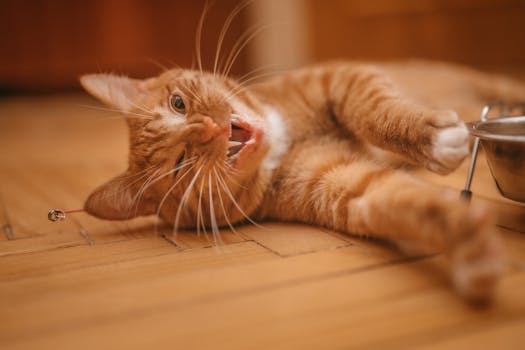
So, how indoor cats develop hunting instincts without outdoor access? It largely comes down to play. For your cat, toys aren’t just objects of amusement; they are surrogates for prey. The flick of a feather wand mimics the flutter of a bird’s wing, a crinkly ball rolling across the floor becomes a scurrying mouse, and a laser dot (used cautiously!) simulates elusive quarry. These play sessions are vital for your cat’s physical and mental well-being. They allow your feline friend to engage their senses, practice their stealth, and execute the satisfying “kill” – often culminating in a happy chew on the captured toy.
#### The Four Stages of a Cat’s Play-Hunt
Observing your cat during play reveals the distinct phases of their natural hunting sequence:
Stalking: This is where the anticipation builds. Your cat will crouch low, eyes wide, tail twitching, slowly inching towards the “prey.” They might wiggle their hindquarters in preparation for the final pounce.
Chasing: Once they’ve identified the perfect moment, they explode into action, darting after the toy with incredible speed and agility.
Pouncing/Capturing: This is the moment of triumph. They leap onto the toy, trapping it with their paws and often bringing it to their mouth.
“Killing” and Manipulating: This stage can involve bunny kicks, shaking the toy, or carrying it around. It’s their way of fully subduing their “catch.”
Enriching the Environment: Beyond the Basic Toy
Simply providing a few toys isn’t always enough to fully satisfy a cat’s predatory drive. To truly understand how indoor cats develop hunting instincts without outdoor access, we need to consider environmental enrichment. This means creating an indoor world that mimics some aspects of the wild hunt.
#### Creating “Prey” Opportunities
Variety is Key: Rotate toys regularly to keep things novel and exciting. A toy that’s been out for months might lose its appeal.
Interactive Play: Dedicated play sessions with you using wand toys are invaluable. This mimics real-life hunting scenarios far better than solo play. Aim for at least two 10-15 minute sessions per day.
Puzzle Feeders: Instead of just dumping kibble into a bowl, use puzzle feeders. These require your cat to “work” for their food, engaging their problem-solving skills and mimicking the effort required to catch a meal. This is a brilliant way to combat boredom and satisfy instincts.
Vertical Space: Cats feel more secure and engaged when they can climb and perch. Cat trees, shelves, and window perches provide vantage points for observation and opportunities to “ambush” toys from above.
* “Scavenger Hunts”: Hide small treats or kibble around the house for your cat to find. This encourages exploration and foraging behavior, a fundamental part of a predator’s routine.
When Instincts Go Unmet: Recognizing the Signs
It’s crucial to recognize that when a cat’s hunting instincts aren’t adequately met, it can lead to behavioral issues. Boredom, frustration, and stress can manifest in various ways. You might notice excessive vocalization, destructive behavior (like scratching furniture excessively), overgrooming, or even aggression towards people or other pets. These are often cries for stimulation and an outlet for those pent-up predatory urges. Understanding how indoor cats develop hunting instincts without outdoor access is not just about fun; it’s about preventing these negative outcomes.
The Role of Genetics and Individual Personality
It’s worth noting that not all cats are created equal when it comes to their hunting drive. Some breeds are known for being more active and predatory, while others might be more laid-back. However, even the most placid cat has these instincts simmering beneath the surface. Factors like age also play a role; younger cats tend to be more boisterous and actively engage in play-hunting, while older cats might prefer a more relaxed approach. In my experience, even a senior cat will perk up for a well-executed feather wand session!
Final Thoughts: Harnessing the Hunter for a Happier Cat
Ultimately, how indoor cats develop hunting instincts without outdoor access is through our active participation and thoughtful environmental design. By providing stimulating toys, engaging in regular interactive play, and enriching their living space, we can ensure our feline companions can fulfill their innate predatory needs safely and happily. It’s about acknowledging their true nature and providing the avenues for them to express it, leading to a more content, well-adjusted, and thriving pet. Don’t underestimate the power of play – it’s the bridge between their wild heart and their cozy hearth.